
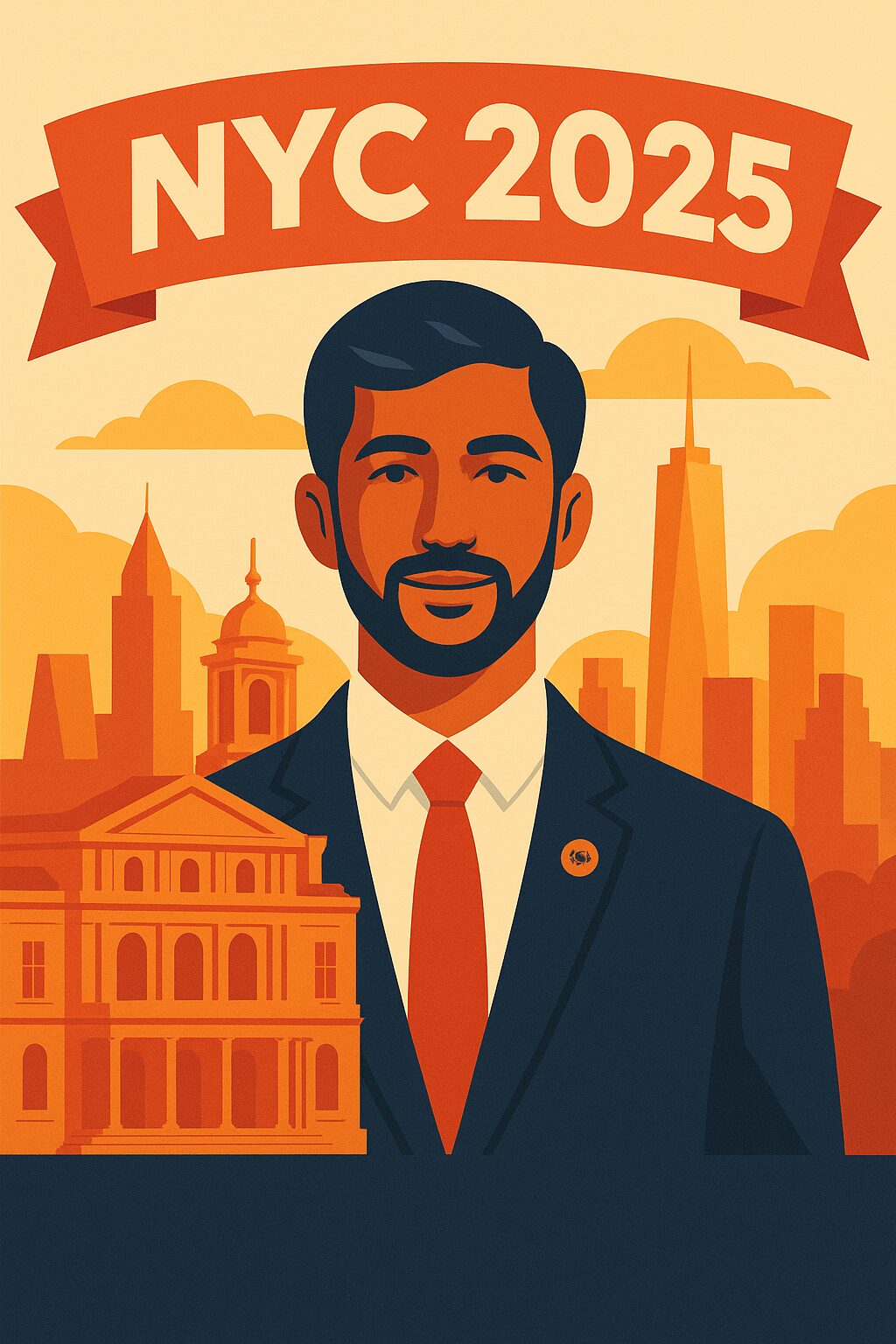
Zohran Mamdani was elected Mayor of New York on November 4, 2025, and will officially take office on January 1, 2026.
Hello, this is Planet News.
Today, we’re taking a closer look at Zohran Mamdani, the young politician who won the New York City mayoral election on November 4, 2025 (local time).
In this piece, we’ll start with his basic profile and background, break down what he means when he calls himself a democratic socialist, and finally explore what his victory might signal for the future of American politics.
We’ll walk through:
-
His life and upbringing
-
What “democratic socialism” means in practice
-
How this election could reshape the U.S. political landscape
Basic Profile & Background
| Category | Details |
|---|---|
| Name | Zohran Mamdani (Zohran Kwame Mamdani) |
| Date of Birth / Age | October 18, 1991 (34 years old) |
| Place of Birth | Kampala, Uganda |
| Nationality | U.S. / Uganda (dual citizenship) |
| Religion | Islam |
| Height | Approx. 173cm (unofficial estimate) |
| MBTI | Known to be ENFJ (not officially confirmed) |
Mamdani grew up in an Indian immigrant household. His mother is filmmaker Mira Nair, and his father is Columbia University anthropologist Mahmood Mamdani.
-
Age 5 → Lived in Cape Town, South Africa
-
Age 7 → Moved to New York
-
Graduated from the Bronx High School of Science
-
Studied African Studies at Bowdoin College
-
Became a U.S. citizen in 2018
His multicultural upbringing played a natural role in shaping his worldview and political values.
▶️ Visit Zohran Mamdani on X (Twitter)
Before Entering Politics
Before stepping into public office, he worked as a housing counselor supporting families facing eviction. During that work, he came to believe that housing insecurity isn’t a personal failure—it’s the outcome of policy decisions.
“Skyrocketing rent isn’t an individual problem. It’s a structural one.”
This realization pushed him toward politics, driven by the belief that “If policy doesn’t change, people’s lives won’t change.”
Political Career: A Series of Upsets
| Year | Event |
|---|---|
| 2024 | Announced candidacy for NYC mayor |
| June 2025 | Defeated former Governor Andrew Cuomo in the Democratic primary |
| Nov 4, 2025 | Won the general election, beating Independent Cuomo and Republican Curtis Sliwa |
| Jan 1, 2026 | Will be officially sworn in as Mayor of New York City |
In 2020, he was first elected to the New York State Assembly by defeating a five-term incumbent in Queens. His 2025 mayoral primary victory over Andrew Cuomo was considered a political upset, and he went on to defeat both Cuomo (running as an independent) and Sliwa in the general election.
With this win, Mamdani will become:
-
The youngest mayor in NYC history (34)
-
The city’s first Muslim and first South Asian mayor
-
The first openly democratic socialist to lead the city
What Is Democratic Socialism?
| Core Idea | Description |
|---|---|
| Method | Change through elections, legislation, and civic participation |
| Goal | Guarantee basic living rights for all residents |
| Economic Approach | Fair taxation on corporations and wealthy individuals to expand public services |
Mamdani’s vision of democratic socialism does not call for abolishing private property.
Instead, it argues for practical policies that ensure ordinary people can afford to live.
His approach aligns with what might be called cost-of-living–focused welfare, similar to the political direction emphasized by South Korea’s President Lee Jae-myung.
Key Policy Positions
| Issue Area | Policy Proposal |
|---|---|
| 🏙️ Rent | Freeze rent citywide, expand large-scale public housing |
| 🚌 Transit | Make buses free, lower subway fares |
| 👶 Childcare & Education | Expand funding for universal childcare and education |
| 💵 Labor | Raise minimum wage to $30 by 2030 |
| 🥬 Basic Goods | City-run grocery stores to lower household food costs |
These proposals gained overwhelming support among young voters, workers, and immigrant communities.
What This Election Signals
The 2025 local elections largely went in favor of the Democratic Party, driven by widespread anxiety over rising housing and living costs.
Many voters felt:
“The city is no longer livable for ordinary people.”
So this election wasn’t just about candidates—it was a vote about the future direction of the city itself.
What Comes Next for U.S. Politics?
Mamdani’s victory represents more than a change in leadership. It signals that New Yorkers chose a path centered on cost-of-living, housing, and everyday economic survival.
-
Democratic Socialists Gain Real Power
The left wing of the Democratic Party—figures like Bernie Sanders and AOC—is now seen not just as activists, but as viable governing leaders. -
Young Voters Are Driving Policy
Voters in their 20s and 30s now believe that elections can change their rent, wages, and daily expenses—and they’re voting accordingly. -
The Democratic Party Will Need to Recalibrate
Internal negotiation between moderates and progressives will shape national policy direction, especially around housing and transit.
In short:
American politics is shifting toward policies centered on everyday economic life.
Conclusion
Zohran Mamdani’s election marks a turning point. It’s a statement that New Yorkers are tired of a city only the wealthy can afford. The real question now is whether New York can become a city where ordinary people can live—and live with dignity.
Whether all of his proposals will be implemented remains to be seen.
But one thing is clear:
New Yorkers no longer believe that staying the same is the answer.